

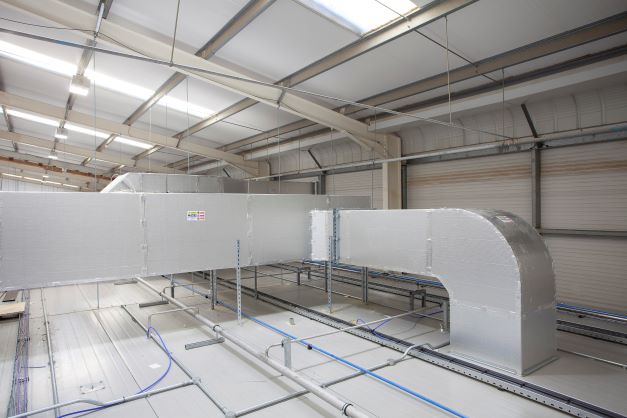
Ductwork is an essential component of HVAC systems, ensuring the efficient distribution of air in residential, commercial, and industrial buildings. The fabrication of ducts requires precision, speed, and consistency to meet industry standards and project specifications. To achieve these goals, manufacturers rely on specialized duct fabrication machines that streamline production and improve accuracy. These machines allow for the efficient processing of various duct materials, including galvanized steel, aluminum, stainless steel, and pre-insulated panels.
Investing in advanced duct fabrication equipment enhances productivity, reduces labor costs, and ensures consistent product quality. A modern duct fabrication machine is designed to perform a variety of operations, including cutting, bending, rolling, and shaping duct sections. Selecting the right types of machines is critical for manufacturers aiming to optimize production processes while maintaining precision and durability.
Cutting Machines
Cutting machines are among the most fundamental equipment used in duct fabrication. They are designed to cut metal sheets or insulation panels into specific dimensions before further processing. These machines can range from manual shears to fully automated CNC cutting systems.
Manual and hydraulic shears are suitable for small-scale production or simple duct shapes. They provide straightforward cutting capabilities but may require more labor and time. For large-scale operations or complex designs, CNC plasma or laser cutting machines are preferred. These systems allow for precise cuts, intricate patterns, and consistent results, minimizing material wastage and improving overall efficiency.
Rolling and Bending Machines
Rolling and bending machines are used to form curved or cylindrical duct sections, such as round or oval ducts. These machines are essential for creating components that fit specific HVAC system layouts, including spiral or circular ductwork.
Plate rolling machines work by passing flat metal sheets through a series of rollers to form a curve. Adjustable bending machines are used for precise angle formation in rectangular duct sections. Both types of equipment allow manufacturers to achieve consistent shapes while maintaining material integrity. Proper rolling and bending ensure smooth airflow and reduce resistance in the final duct system.
Flanging and Seaming Machines
Flanging and seaming machines are critical for joining duct sections together and preparing them for assembly. Flanging machines create uniform edges that allow duct sections to connect securely, while seaming machines produce airtight joints to prevent air leakage.
These machines are particularly useful for producing spiral ducts, rectangular ducts, and custom HVAC components. Automatic flanging and seaming systems increase production speed, reduce manual labor, and improve the overall quality of duct joints. Properly executed seams and flanges contribute to better energy efficiency and system longevity.
Notching and Punching Machines
Notching and punching machines are used to create openings, cutouts, or perforations in duct panels. These operations are necessary for integrating components such as access doors, dampers, or inspection panels into the ductwork.
Notching machines remove sections of metal to create precise angles or profiles, while punching machines use mechanical or hydraulic force to create holes or slots. Automated punching machines allow for repetitive, high-speed operations with consistent accuracy, reducing material waste and ensuring proper alignment of components.
Slitting and Profiling Machines
Slitting machines are designed to cut large coils or sheets of metal into narrower strips suitable for duct fabrication. This operation is essential for preparing raw materials for further processing. Profiling machines, on the other hand, create specific shapes or edges required for duct sections, such as T-bars or corner profiles.
These machines provide precision and repeatability, ensuring that each duct component meets design specifications. Slitting and profiling also improve production efficiency by reducing the need for manual measurement and adjustment during assembly.
Automated CNC Duct Fabrication Lines
For high-volume production and complex duct designs, automated CNC duct fabrication lines offer a comprehensive solution. These integrated systems combine multiple processes, including cutting, bending, rolling, punching, and flanging, into a single automated workflow.
CNC duct fabrication machines are capable of producing highly precise and uniform duct components with minimal operator intervention. These systems are particularly beneficial for large-scale commercial or industrial projects, where speed, accuracy, and consistent quality are critical. Additionally, CNC machines can be programmed for custom designs, allowing manufacturers to produce specialized components without additional setup time.
Spiral Duct Machines
Spiral duct machines are specifically designed for producing round or spiral ductwork. These systems roll and seam metal sheets into cylindrical ducts with consistent dimensions. Spiral ducts are commonly used in HVAC systems due to their structural strength, efficient airflow, and ease of installation.
Automatic spiral duct machines can handle large production volumes while maintaining high precision. They are ideal for manufacturers who require both speed and accuracy in producing circular or spiral duct systems.
Conclusion
Duct fabrication machines play a vital role in modern HVAC manufacturing by providing precision, efficiency, and consistency. From basic cutting, bending, and rolling equipment to advanced CNC and spiral duct machines, each type serves a specific purpose in producing high-quality duct components.
By selecting the appropriate duct fabrication machine, manufacturers can streamline production, reduce labor costs, minimize material waste, and ensure the durability and performance of HVAC systems. Investing in the right combination of machines supports operational efficiency, enhances product quality, and helps meet the growing demands of modern building projects.