

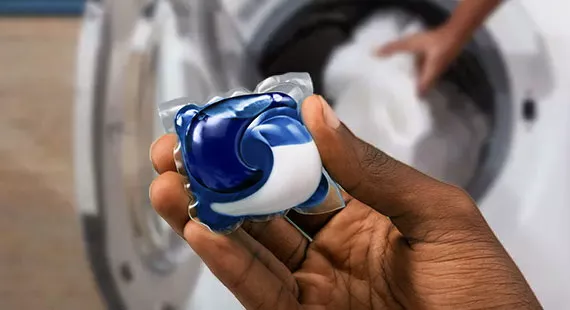
The demand for detergent pods has increased significantly due to their convenience, precise dosing, and mess-free operation. As the market continues to grow, manufacturers are seeking ways to increase efficiency, reduce labor costs, and maintain consistent product quality. Automation and integration in detergent pod making machines have become key solutions to meet these objectives. By combining advanced control systems, automated components, and seamless integration with downstream processes, manufacturers can achieve high-speed, reliable, and scalable production.
The Role of Automation in Pod Production
Automation plays a central role in modern detergent pod production. Detergent pod making machines perform multiple operations simultaneously, including film handling, detergent dosing, sealing, cutting, and packaging. Automated systems reduce the need for manual intervention, minimizing errors and maintaining uniform pod quality.
Machines such as the Detergent Pod Making Machine are designed with advanced programmable logic controllers (PLC) and human-machine interfaces (HMI) to monitor and control every aspect of production. Automation ensures precise dosing, consistent sealing, and accurate cutting, all of which are critical for producing pods that meet quality standards. With real-time monitoring, operators can adjust parameters quickly, preventing defects and reducing material waste.
Key Automation Features
Several automation features are commonly found in modern detergent pod making machines:
- Precision Dosing Systems: Automated dosing pumps and volumetric fillers provide exact measurements of liquid, gel, or powder detergents. Accurate dosing prevents overuse, maintains consistent pod weight, and enhances cleaning efficiency.
- Sealing and Cutting Automation: Heat or ultrasonic sealing systems, combined with automated cutting mechanisms, produce leak-proof, uniformly shaped pods. These automated processes ensure consistent pod integrity and reduce downtime caused by manual adjustments.
- Film Handling Automation: Water-soluble films require careful handling to prevent tearing and misalignment. Automated tension control, alignment sensors, and feeding rollers ensure smooth operation and consistent pod formation.
- Integrated Sensors and Alarms: Sensors detect misaligned film, incorrect dosing, incomplete sealing, or mechanical malfunctions. Automated alerts allow operators to intervene immediately, minimizing downtime and preventing defective pods.
Integration with Production Lines
Beyond individual machine automation, integration with other production line components enhances overall efficiency. Detergent pod making machines can be integrated with material handling systems, packaging units, and quality control stations.
Integration allows for seamless transfer of pods from the forming machine to counting, filling, and packaging systems. Conveyor systems, automated binning, and robotic handling reduce manual labor and ensure continuous production flow. Integrated quality control systems can inspect pods for weight, seal integrity, and shape, providing feedback to the machine to make real-time corrections. This level of integration maximizes output while maintaining product standards.
Benefits of Automation and Integration
The combination of automation and integration offers several advantages for detergent pod production:
- Increased Production Speed: Automated machines can operate continuously at high speeds, producing hundreds or thousands of pods per hour. Integration with downstream processes ensures smooth material flow and reduces bottlenecks.
- Consistency and Quality: Automated dosing, sealing, and cutting provide uniform pods with accurate weight and durable seals. Real-time monitoring detects anomalies, preventing defective products from reaching the packaging stage.
- Reduced Labor Costs: Automation reduces the need for manual intervention, allowing fewer operators to manage high-volume production efficiently. This decreases labor expenses while improving operational reliability.
- Scalability: Integrated systems make it easier to scale production. Machines can handle increased throughput without requiring major upgrades, and modular designs allow additional machines to be added to the production line as demand grows.
- Minimized Waste: Automation reduces errors in dosing, sealing, and film handling, resulting in fewer defective pods and lower raw material waste.
Considerations When Implementing Automation
While automation and integration provide numerous benefits, manufacturers should consider factors such as initial investment, machine compatibility, operator training, and maintenance requirements. Advanced machines require skilled personnel to monitor operations, perform maintenance, and troubleshoot issues. Investing in proper training and support ensures that the automation system operates efficiently and delivers the expected ROI.
Additionally, integration should be planned to match production goals and space requirements. Ensuring compatibility with existing equipment and future expansion plans is essential for long-term operational efficiency.
Conclusion
Automation and integration in detergent pod making machines have transformed laundry pod production by increasing speed, ensuring consistent quality, and reducing labor costs. Key features such as precision dosing, automated sealing and cutting, advanced film handling, and integrated monitoring enhance efficiency while minimizing waste.
Investing in a reliable Detergent Pod Making Machine with automation and integration capabilities allows manufacturers to streamline operations, scale production, and maintain competitive advantages in the growing laundry pod market. By leveraging these technologies, businesses can produce high-quality detergent pods efficiently and consistently while meeting increasing consumer demand.