

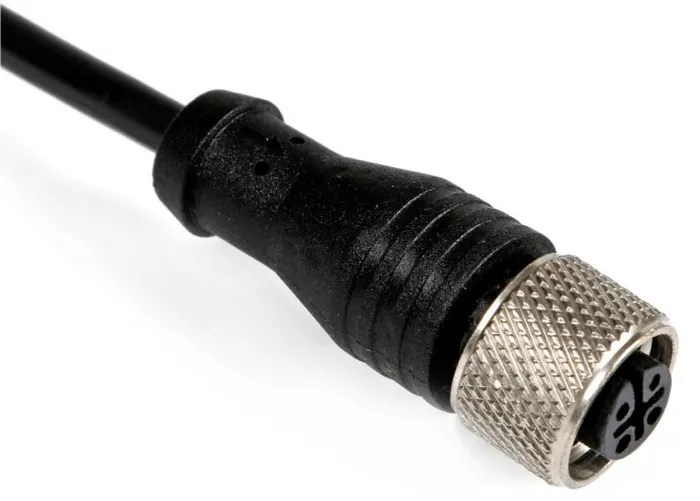
M12 connectors are a widely used type of circular connector in industrial automation, control systems, and sensor networks. Their compact design, reliable performance, and versatility make them a standard choice for connecting sensors, actuators, field devices, and other industrial equipment. Understanding the features, applications, and advantages of M12 connectors helps engineers and technicians select the appropriate connector for their systems.
The M12 connector is named for its 12-millimeter threaded coupling, which provides a secure and vibration-resistant connection. These connectors are available in various pin configurations, typically ranging from 3 to 12 pins, and are designed to transmit both power and signal effectively. The M12 Connector is engineered for reliability and durability, and detailed product specifications and options of the M12 Connector demonstrate why it is widely used in modern industrial applications.
Design and Construction Features
M12 connectors have a circular housing with a threaded coupling that ensures a secure connection even in environments exposed to vibration or movement. The housing can be made of plastic or metal, with metal versions offering greater mechanical strength and electromagnetic interference (EMI) shielding. The compact design of M12 connectors allows them to be used in tight spaces where larger connectors may not fit.
The internal contacts are typically made of copper alloys, often plated with gold, nickel, or tin to ensure low contact resistance and reliable signal transmission. Gold plating is particularly beneficial in low-voltage or signal-sensitive applications, while nickel and tin provide cost-effective and durable solutions for general-purpose use. These construction features make M12 connectors suitable for demanding industrial environments.
Pin Configurations and Coding
M12 connectors are available in a variety of pin configurations, depending on the application requirements. Standard configurations include 3, 4, 5, 8, and 12 pins. The number of pins determines the type of signals that can be transmitted, such as power, analog, or digital signals, as well as data communication for sensors and field devices.
Connector coding is another important aspect of M12 connectors. A-coded connectors are commonly used for standard sensors and actuators, while B-coded, D-coded, or X-coded connectors are used for industrial Ethernet and high-speed data applications. Proper coding prevents mismating and ensures that the connector functions correctly in the system.
Key Benefits of M12 Connectors
M12 connectors offer several advantages that make them a preferred choice in industrial applications.
Compact and Space-Saving Design: The small form factor of M12 connectors allows them to fit in confined spaces without compromising mechanical or electrical performance.
Reliable Electrical Performance: With low contact resistance and secure pin connections, M12 connectors provide stable power and signal transmission even under vibration or heavy usage.
Environmental Protection: Many M12 connectors are rated IP65, IP67, or higher, providing protection against dust, water, and contaminants. This makes them suitable for harsh environments, including outdoor installations, washdown areas, and dusty factory floors.
Versatility: M12 connectors are compatible with a wide range of sensors, actuators, and field devices, making them ideal for flexible and modular system designs.
Industrial Applications
M12 connectors are used across multiple industries due to their versatility and reliability. In industrial automation, they connect proximity sensors, photoelectric sensors, and actuators to control systems. This ensures accurate signal transmission and reliable operation of automated machinery.
In robotics, M12 connectors provide secure connections between robotic arms and control systems, maintaining consistent performance despite repeated movement and vibration. In transportation and logistics, they are used in vehicles, conveyor systems, and material handling equipment for power and signal distribution.
Fieldbus and industrial Ethernet systems also rely on M12 connectors, particularly D-coded and X-coded variants, to achieve high-speed data communication while maintaining mechanical stability in harsh industrial conditions.
Environmental and Durability Considerations
The durability of M12 connectors is enhanced by the materials used in their construction and their environmental sealing. Plastic housings are lightweight and resistant to moderate mechanical impact, while metal housings offer high mechanical strength and EMI protection. Sealing elements such as O-rings ensure that IP-rated connectors remain dust- and water-resistant, even after repeated mating and unmating cycles.
Temperature resistance is another key benefit. M12 connectors can operate reliably over a wide temperature range, making them suitable for environments with extreme heat or cold. This combination of durability, environmental protection, and mechanical reliability makes M12 connectors highly suitable for industrial applications.
Installation and Maintenance
Proper installation is critical to the performance and longevity of M12 connectors. Connectors should be aligned carefully to prevent cross-threading, and the recommended torque should be applied to secure the threaded coupling. Regular inspection for signs of wear, corrosion, or damage ensures that the connector continues to function reliably over time.
Maintenance typically involves cleaning the contacts, checking the integrity of sealing elements, and ensuring proper connection torque. Following these practices reduces the risk of signal loss, electrical failure, and unplanned downtime.
Conclusion
M12 connectors are an essential component in modern industrial systems due to their compact design, reliable electrical performance, and ability to withstand harsh environments. Their versatility, environmental protection, and wide range of pin configurations make them suitable for sensors, actuators, robotics, industrial Ethernet, and other applications. By understanding their design, benefits, and maintenance requirements, engineers and technicians can optimize system performance, ensure reliability, and extend the lifespan of equipment using M12 connectors.